
What Is Adlai?
An ancient Philippine grain. Naturally gluten-free. More protein than quinoa.
What is Adlai?
Traditionally cultivated in upland regions of the Philippines and neighboring countries, it is valued for its high protein content, slow glycemic impact, and remarkable culinary versatility.
Unlike most modern staple grains that were redesigned for industrial speed, adlai grows slowly and develops a uniquely satisfying texture and nutritional profile.
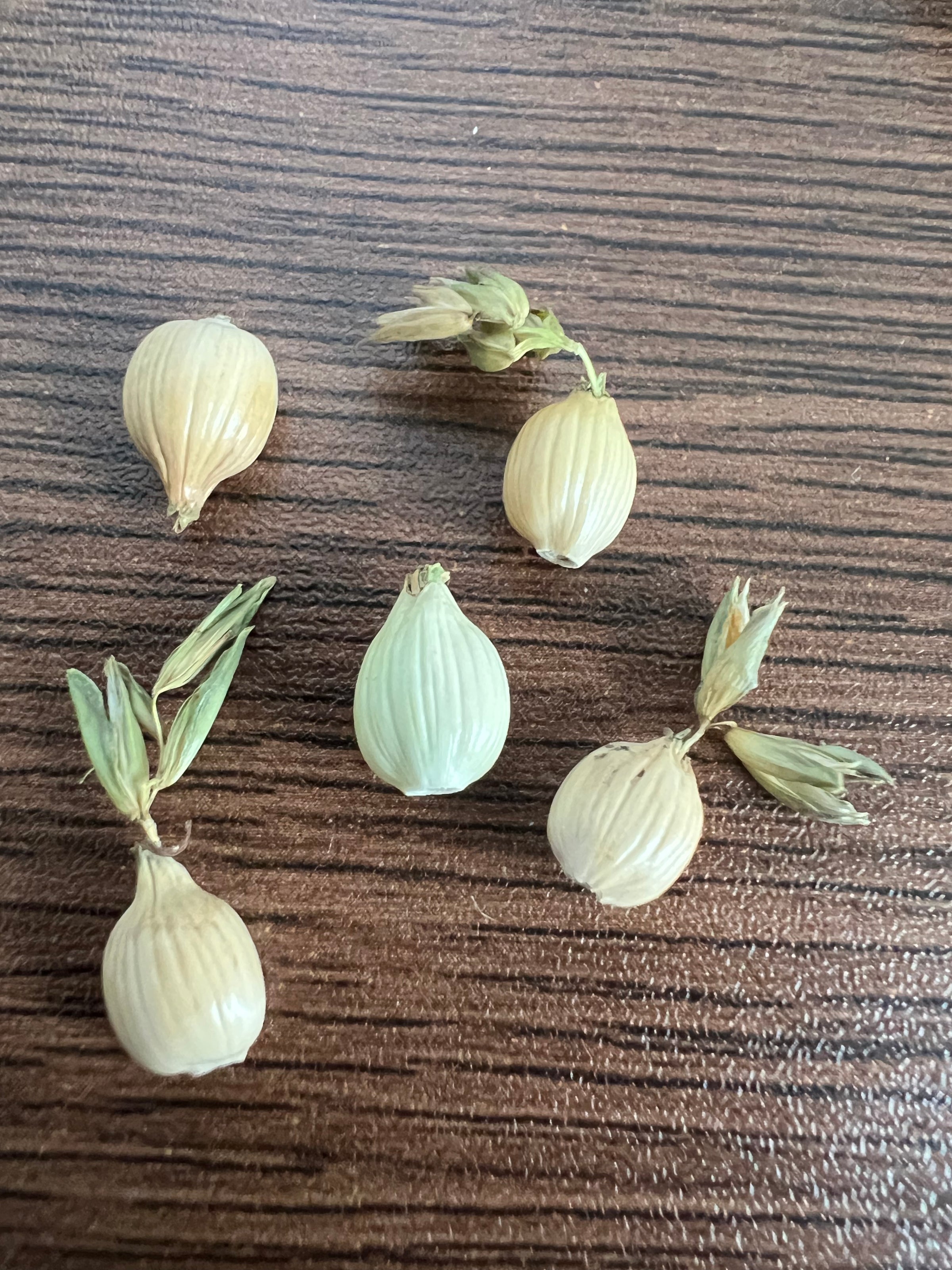
Adlai is not rice. Adlai is not pasta. It is its own category — a grain with the daily versatility of rice, the structure of barley, the protein of quinoa, and a culinary range that moves easily across cuisines.
There is a simple reason most people have never heard of adlai. It grows slowly. In an era when global agriculture reorganized itself around speed — faster growth, faster harvests, faster distribution — a grain that insists on taking its time does not become a commodity. It remains where it began: in small farming systems, in mountain landscapes, in kitchens that cook for nourishment rather than scale.
That is not a failure of the crop. It is the source of its quality.
Adlai, botanically known as Coix lacryma-jobi ("Job's tears"), has been cultivated for thousands of years in the upland regions of the Philippines and other parts of Southeast Asia. In herbal and traditional medicine contexts it is sometimes called "coix seed," although it is not a seed — it is a naturally gluten-free grain in the grass family Poaceae. Only recently has it begun to appear outside its communities of origin, usually described as a "healthy alternative to rice or pasta." That description is a useful starting point, but it misses the more important truth.
It is its own category: a grain with the daily versatility of rice, the structure of barley and pasta, the protein and nutritional density people associate with quinoa, and a culinary range that moves easily across cuisines.
Common questions
Yes. Adlai is naturally gluten-free.
Yes. It contains more protein than most common staple grains, including white rice and even quinoa.
Mild, slightly nutty, clean, and extremely versatile across cuisines.
No. It cooks using a method similar to rice and becomes intuitive after the first time. See the complete cooking guide →
That is exactly what it was traditionally grown for.
Grown for generations in the Philippines and across Southeast Asia. →See where adlai comes from
Why adlai grows slowly
Adlai grows slowly because it was never bred for the rapid harvest cycles that dominate modern grain agriculture. Traditional varieties mature at a slower pace and develop fully in rain-fed upland environments rather than high-yield irrigated systems.
In many ways adlai still behaves like a traditional landrace grain — a crop shaped by generations of farmers and local environments rather than industrial breeding — which is one of the reasons it differs so much from modern staples like rice. See Adlai vs. Rice: A Complete Comparison.
Slowness, in this case, is not nostalgia. It is agronomy.
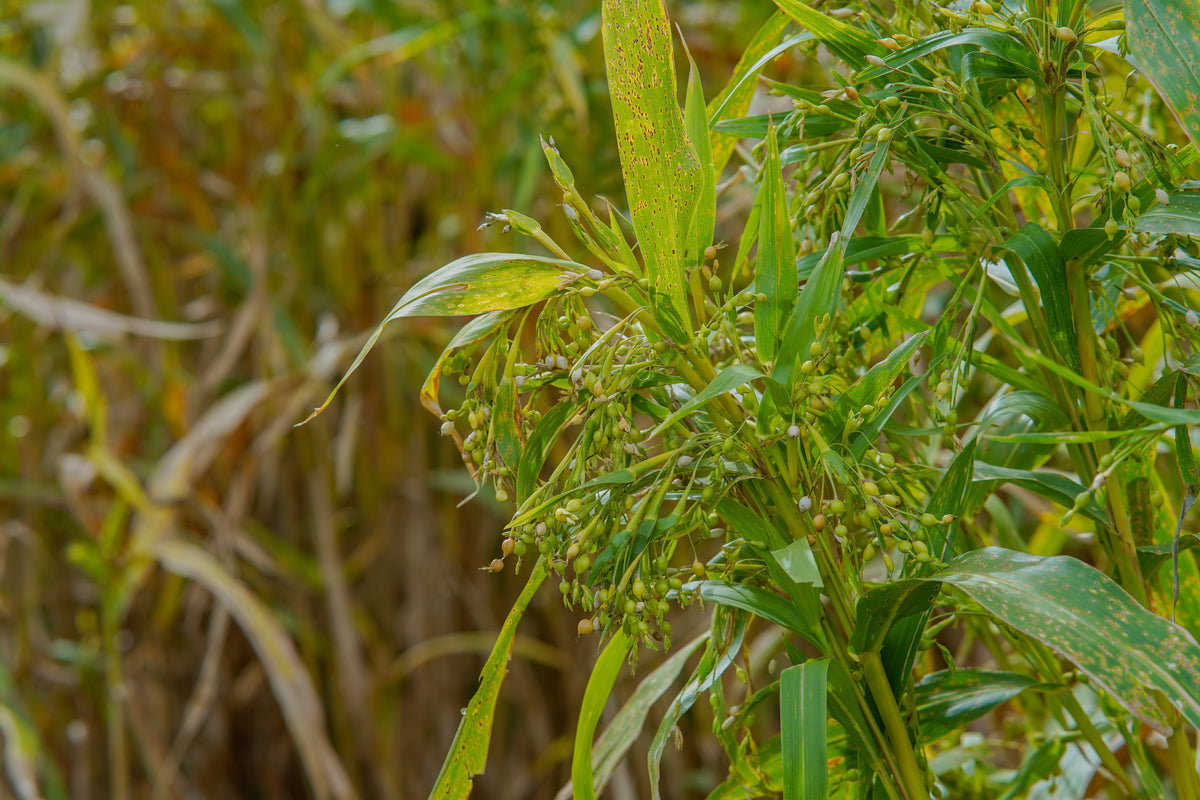
Its slower growth cycle is also the reason adlai has all of its nutritional and culinary qualities at once. The plant develops fully in mineral-rich soil without being pushed for rapid yield. The result is a grain that is unusually complete in both nutrition and texture — something that is rare in modern staple crops, which are typically optimized for one attribute at the expense of the others.
Nutrition and energy
From a nutritional standpoint, adlai stands comfortably beside the most celebrated "super grains." Its protein content is higher than quinoa. It is naturally gluten-free. It also provides meaningful fiber and a broad spectrum of micronutrients.
One of its most notable characteristics is its slower glycemic response. Because the grain remains intact and digests gradually, it releases energy steadily rather than producing the rapid spike and drop associated with highly refined starches.
For people focused on metabolic health, plant-forward diets, or gluten-free eating, this combination of protein, fiber, and slow digestion makes adlai particularly appealing. But nutrition alone does not make a staple.
| Category | Adlai Pearl | White Rice | Brown Rice | Quinoa |
|---|---|---|---|---|
| Fiber | Naturally high | Very low | Moderate | Moderate |
| Glycemic impact | Low & gradual | High & fast | Medium | Medium |
| Satiety | Deep & long-lasting | Light, short | Moderate | Moderate |
| Gluten-Free | Yes | Yes | Yes | Yes |
Texture and culinary versatility
Nutrition alone does not make a staple. Staples are defined by how they feel to eat, day after day.
Each grain of adlai remains intact when cooked. It has a gentle chew, a clean finish, and a subtle nuttiness that does not dominate the plate. It absorbs sauces and broths beautifully while keeping its structure, which allows it to work in everything from simple garlic dishes to richly flavored stews and cold grain salads. It reheats without collapsing, making it especially practical for meal preparation and storage.
You finish a bowl of adlai and you are not looking for something else. That sense of satisfaction is not heaviness. It is completeness.
Adlai satisfies in a way that light, fast-digesting grains rarely do. It works in breakfast bowls, composed salads, sides, mains, and desserts. It is neutral enough to belong anywhere and distinctive enough to elevate a dish.
For people coming to it from a health perspective, its appeal is immediate. The combination of high protein, fiber, and slow digestion supports stable energy and lasting satiety. For people coming to it from a culinary perspective, the appeal is just as strong: it behaves like a chef's grain while remaining a home cook's staple.
Those two qualities — nutrient density and culinary pleasure — rarely exist in the same place. With adlai, they do. And they do because the grain was never redesigned for industrial speed.
How to cook adlai
Cooking adlai is straightforward. Rinse the grain, combine one part adlai with two and a half parts water, bring it to a boil, and let it simmer gently until the water is absorbed. Allow it to rest for a few minutes, fluff it, and it is ready to serve.
There is no special technique required — another hallmark of a true staple food: it fits easily into ordinary life. See the complete step-by-step guide to cooking adlai.
1 part adlai : 2½ parts water
1 : 2 water
1 : 3+ water
20–25 minutes + 5 min rest
Stovetop, rice cooker, or pressure cooker — all work equally
What does adlai taste like?
Adlai has a mild, slightly nutty flavor that adapts easily to the dish around it. Its taste is subtle enough to work with a wide range of cuisines, from Mediterranean herb dishes to Southeast Asian coconut preparations or Middle Eastern stews.
Most people notice its texture before its flavor. The grains remain distinct and gently chewy, more similar to al dente pasta or barley than to soft rice. That structure allows adlai to absorb sauces and aromatics while still keeping its identity on the plate.
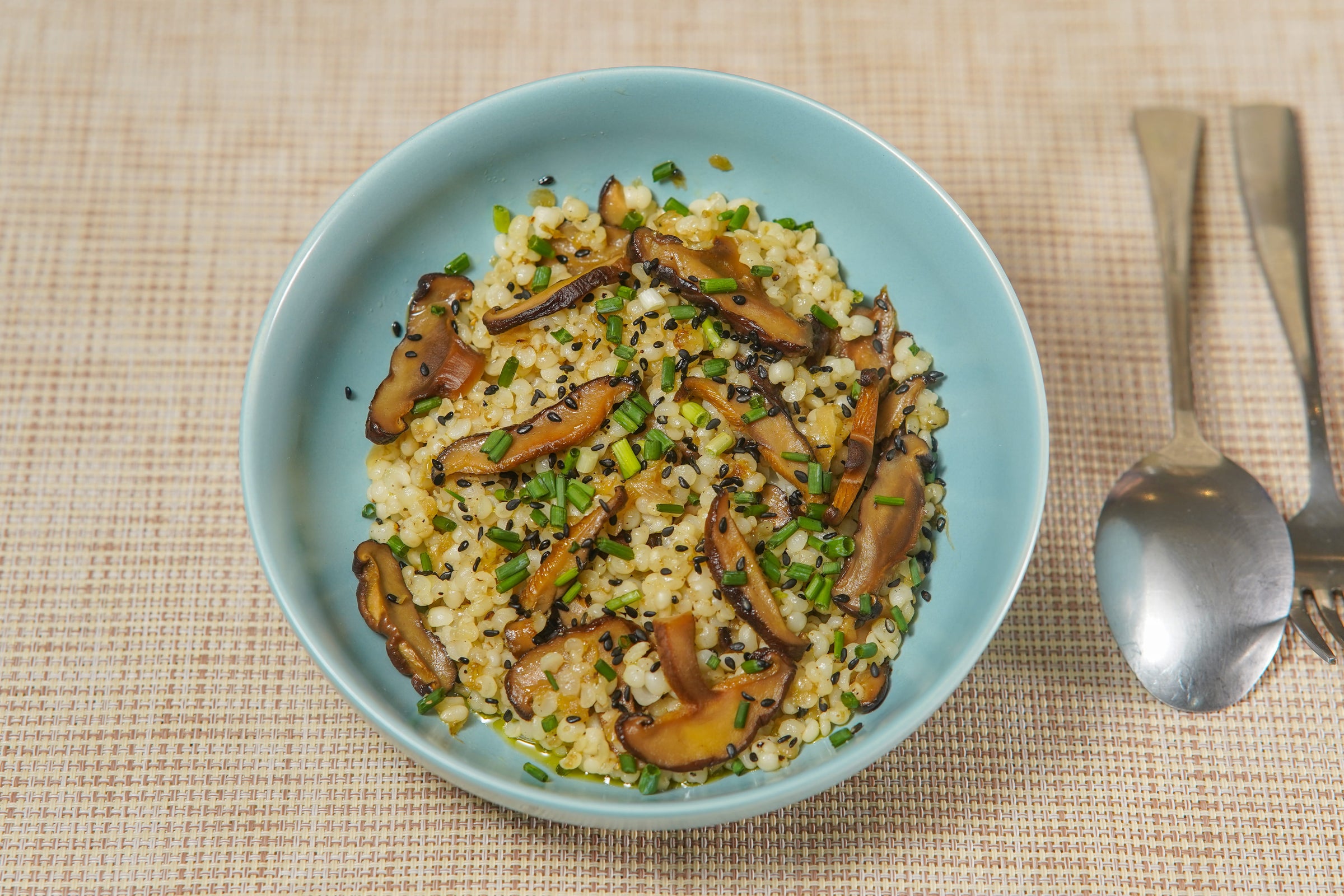
Because it is so adaptable, adlai can replace almost any grain in almost any meal without feeling like a substitution. It moves easily across a wide range of cuisines and flavors: Mediterranean, French, Italian, Spanish, Middle Eastern, Persian, Indian, East Asian, and, of course, Filipino.
It works in breakfast bowls, composed salads, sides, mains, and desserts. It is neutral enough to belong anywhere and distinctive enough to elevate a dish.
Is adlai the same as Job's Tears?
Adlai is the culinary grain form of a plant botanically known as Coix lacryma-jobi, a member of the grass family Poaceae that is native to Southeast Asia. In English and in much of the scientific literature the plant is commonly called "Job's tears."
The name "Job's tears" comes from the plant's distinctive bead-like grains. The hard outer shells resemble small teardrops, which is why Arab traders historically referred to the plant as "the tears of Job." That description eventually became the Latin scientific name lacryma-jobi, literally meaning "Job's tear."
In Southeast Asia, however, the plant is known by many local names that reflect regional languages and culinary traditions. In the Philippines the edible grain is widely known as adlai (or adlay). Linguistically the word is related to older regional terms referring to the plant and its bead-like grains, which were sometimes used historically for jewelry or rosaries before the softer cultivated varieties were used as food.
Across Asia the same species appears under many other names. In Chinese it is known as yìyǐ rén, meaning the kernel of the plant, and has been used both as a food and in traditional herbal preparations for centuries. In Vietnam the grain is commonly referred to as bo bo in culinary contexts, while other traditional names describe the plant as a "cereal bead" or "grain bead," a reference to the smooth, pearl-like shape of the seeds.
Despite these different names, the plant itself is the same species. What differs is how it is used. Historically there have been two main forms: wild varieties with very hard shells often used as beads or ornaments, and cultivated varieties with softer shells harvested as a cereal grain for cooking.
So while Job's tears is the botanical and historical name used internationally, adlai refers specifically to the culinary grain as it is grown and eaten in the Philippines and other parts of Southeast Asia.
Why adlai is being rediscovered now
For most of modern food history, staple crops were chosen for efficiency. Grains that could be harvested quickly, processed uniformly, and transported across continents became the foundation of global diets. That system succeeded in feeding billions of people. But it also narrowed the range of grains that appear on our tables.
Adlai remained largely outside that system. It continued to be grown in upland farming landscapes and used in regional kitchens where the goal of food was not speed or scale, but nourishment and satisfaction.
Today, as more people look for ingredients that support metabolic health, gluten-free living, plant-forward cooking, and meals that truly sustain them, grains like adlai are being rediscovered. Not as curiosities. As staples.
The question "What is adlai?" therefore has a surprisingly simple answer. Adlai is an ancient Philippine grain that cooks easily, nourishes deeply, and adapts naturally to almost any cuisine. It isn't meant to replace another ingredient. It stands on its own. And once it enters a kitchen, it does what all true staples eventually do: it stops being something new and becomes something you reach for without thinking.
14oz bag — ships across the US